
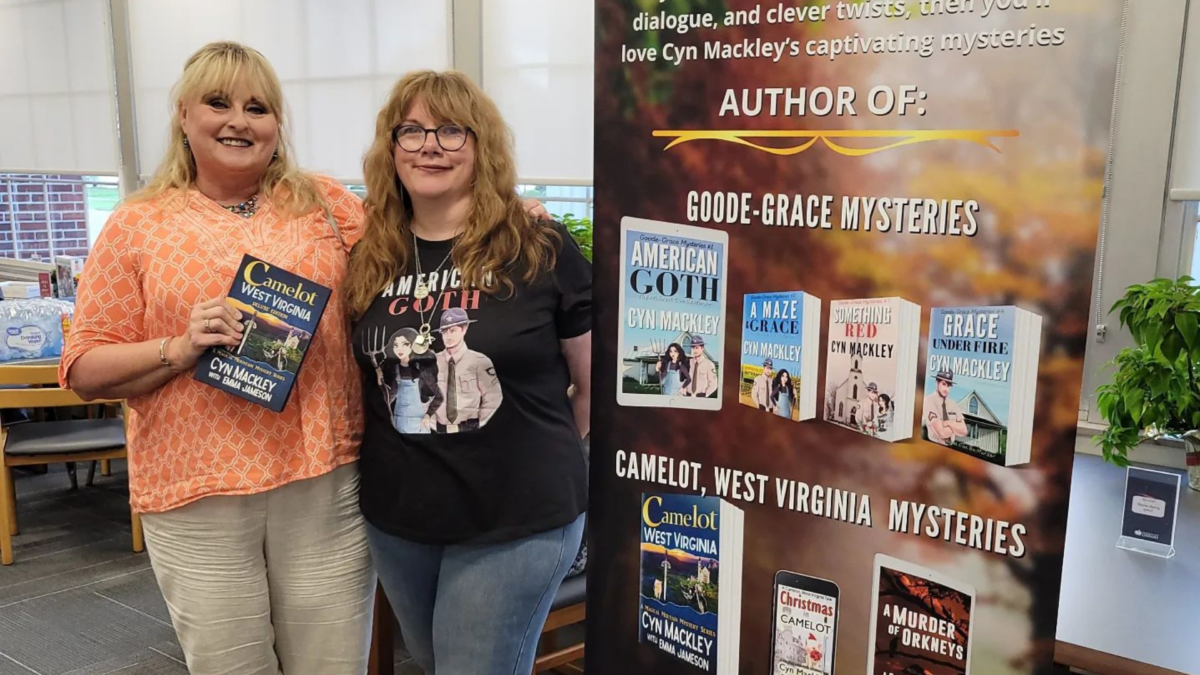

The Birth of a Storyteller
For Cynthia Mackley, the world has always been a collection of stories. Long before she became an established journalist and a published novelist, she was a six-year-old girl living in an Appalachian housing project.
Mackley says her passion for creating and writing stories has been an important part of her life since childhood.
“I can clearly remember being sick one day when I was about six and putting together a book out of folded paper,” Mackley says. “I folded the paper, so I had pages, and I drew and illustrated it. It was about two brothers who lived in a windmill and fished. I think I was confusing a lighthouse with a windmill.”
Short stories Mackley wrote as a child influenced her love for storytelling from an early age. Her love of writing eventually blossomed into a career in publishing crime novels and other fictional works.
Mackley is responsible for works such as “A Girl Of His Dreams: A Midwestern Mystery” (2017), “Big Break: A Ballardville Mystery” (2021) and most recently “It Happened One Knight” (2026), which is the third entry in Mackley’s Camelot West Virginia Mysteries series.
In elementary school, Mackley’s teachers recognized her writing talent and encouraged her to continue. One writer Mackley has always looked up to is none other than Laura Ingalls Wilder. Wilder was an American author, journalist and schoolteacher known for writing the Little House on the Prairie book series between 1932 and 1943.
“I was obsessed when I first read the Laura Ingalls Wilder books, and I wanted to write something like that,” Mackley says.
With dreams of being a writer, Mackley knew she needed an upgrade from crafting paper booklets. Her uncle previously worked at Norfolk Southern Railroad, which transitioned from manual to electric typewriters. There, Mackley’s mother obtained a manual typewriter for her.
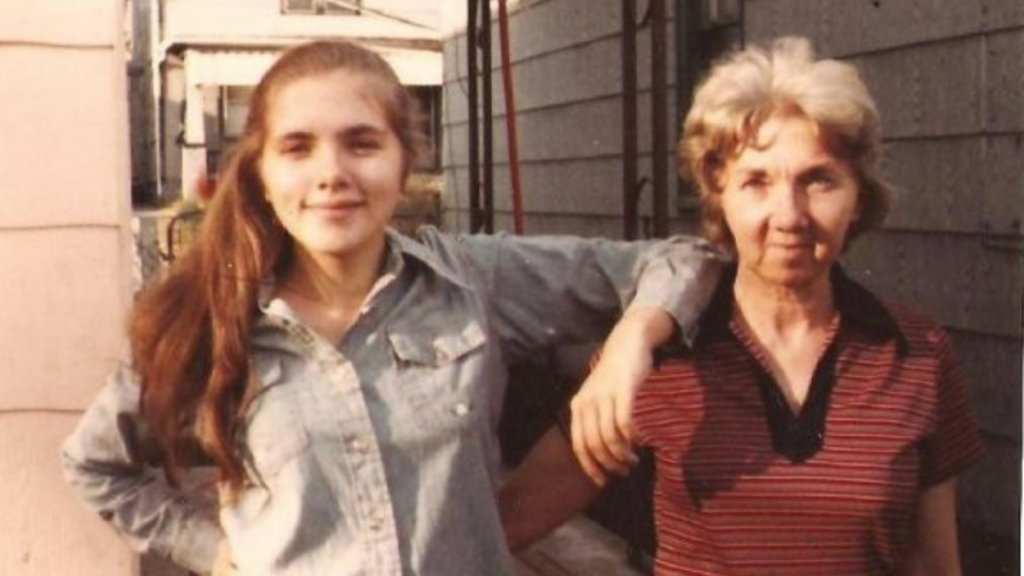
Since then, Mackley has kept numerous files containing handwritten notes, papers and stories she wrote during her youth. One of those was a guide she wrote in sixth grade about the basics of essay writing for students.
That guide also covered the convergence of storytelling and technology; an intersection Mackley would explore in depth later in life.
Overcoming “Appalachian Fatalism”
Mackley grew up in the Wayne Hills Housing Project in Portsmouth. Her family, she says, faced economic struggles, and this specific housing project has been associated with reports of deterioration and community safety issues.
“I grew up in a housing project in Appalachia with very poor people,” Mackley says. “The generation before me and my cousins, and our parents, didn’t get the chance to finish high school.”
Mackley’s drive for writing wasn’t just based on a childhood whim, but also sprang from an urge to avoid feeling stuck. She wanted to prevent what she calls “Appalachian fatalism.” This, according to Mackley, is the idea that those in Appalachia cannot improve their lives.
Writing stories was her way of getting out of that bubble as well to show the world what she had to offer as an author.
When the time came for Mackley to go to college, she initially planned on attending Ohio University for creative writing. However, her mother faced serious health problems at the same time, so Mackley could not attend.
As a result, she chose a college closer to home and attended Shawnee State University in Portsmouth. After starting college, a colleague of Mackley’s informed her of a program for those interested in working in radio, television and film at Bowling Green State University.
Intrigued by the program, Mackley transferred to BGSU to complete her bachelor’s degree. She says her college tenure was difficult because of her mother’s death; at the same time, she met her husband and fell in love with television and media.
After graduating, Mackley began writing news segments for television, eventually working in other areas of production.
The Evolution of a Journalist
Mackley started her professional life working for WUPW Fox 36 and WTVG Channel 13 in Toledo, covering topics ranging from crime to emerging technology. As technology shifted from linear to digital, Mackley found herself at the center of that change, moving from marketing into the newsroom.
In the mid-1980s, the internet began taking off. Mackley remembers working with reporters to modify print news stories for an online audience. Her willingness to adapt led her to web production and tech writing, where she helped decipher complex systems for everyday people.
“I worked once with an engineer who really didn’t have the patience for news people,” Mackley says. “I ended up being his intermediary in trying to explain technology to them.”
Today, Mackley and Scioto County Daily News strive to write about complex ideas in “plain language.” The publisher, Mark Craycraft, is passionate about avoiding “mind-numbing” jargon, instead of favoring accessibility.
“We don’t dumb down anything; we just really believe in everyday plain speech,” Craycraft says. “We make it as accessible to every person as we can.”
Mackley is a standout local reporter with her ability to go beyond the data when breaking news on crime in addition to her lengthy research. There is, as Mackley points out, more to a story than just “a bunch of random facts.”
From Reporting to Writing Novels
Mackley’s perspective as both a crime reporter and author is deeply rooted in her upbringing. She understands that social mobility, or the ability to change one’s economic strata, is not easy from her time living in affordable housing; as a crime reporter, she also knows what those in Scioto County are up against.
According to an article published by The Ohio Newsroom, between 2020 and 2023, Scioto County had the highest rate of unintentional drug overdose deaths in the state of Ohio.
Substance abuse disorders and the effects of poverty are aspects Mackley does not shy away from in her novels, especially in her Camelot West Virginia book series.
Those novels are creative in their reimagining of the tales of King Arthur. Mackley takes classic tropes of knights and noble quests and transforms them into stories about modern-day West Virginia coal towns.
Her novels are inspired by real-life incidents that stuck with her years later. Mackley tends to focus on the “human bits” of daily life and trauma that first responders face. A story Mackley adores is inspired by one deputy’s interaction with an elderly woman.
“This old lady called the deputy one time and asked if she could be given a soda and laid to bed,” Mackley says. “That’s just one example of many where I made sure to make note of and include somewhere in a book.”
Craycraft enjoys Mackley’s ability to include these humanizing details in her literary works and compliments on her narrative skills that make newswriting more compelling.
“I allow her to weave some of those stories into her characters, and it makes for even more interesting and compelling reporting,” Craycraft says. “It gives her ideas for more scenarios.”
True crime is a subgenre that has always held Mackley’s attention. Her curiosity in the genre ties back to her time reporting crime and shuffling through police reports.
However, Mackley is the kind of writer who cannot be tied down to one genre. One day, she may be drawn to write a Western and perhaps on another she’ll create stories filled with drama like a soap opera.
Mackley goes “spelunking,” as she calls it, into records to find patterns that some understaffed outlets may miss. She accomplishes this by monitoring scanner logs, putting out daily public information requests for police logs and cross-referencing court indictments. It’s no wonder, Mackley says, that this background knowledge helps her craft true crime novels.
A Legacy of Optimism
Despite the sometimes dark subject matter, Mackley does not like to sensationalize crime in any way, especially when reporting real people close to her own community. Instead, she believes it’s never too late for people to turn their lives around.
“I really like to see that [fatalism] kicked into some Appalachian optimism,” Mackley says. “Because clearly, if you can survive some of the stuff these folks have survived, you could build up and shine forth.”
Just as she shows up for her community, she shows up for her colleagues. Craycraft knows Mackley will swiftly take control when he needs extra support.
“She knows when I’m having a couple of bad days,” Craycraft says. “We still carry on business as usual. She’ll cover all the bases until I can get myself back in shape.”
Scioto County Daily News is not immune to the challenges of sustaining a local publication in the modern news industry; Mackley remains steadfast in her belief of earnestly reporting on local issues like mental health and homelessness, believing journalism must be robustly fact-checked and human-centered.
“Being able to just say that I write for a living is pretty darn exciting for me,” Mackley says. “Considering where I came from, not a lot of people get to do the thing they wanted.”
Find us on Social Media