A Guernsey County Well Pad Fire reveals the potential dangers of oil drilling
In Guernsey County on Jan. 2, an explosion at the Groh well pad resulted in a large fire that didn’t result in injury, but left giant reservoirs charred and dark.
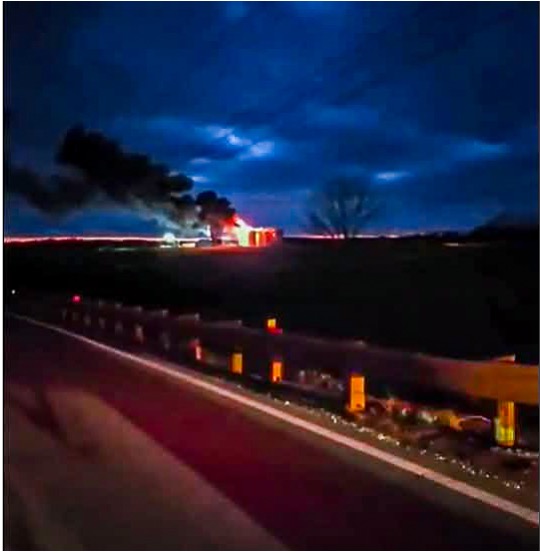
A video taken by Donald Warnock, Antrim Community volunteer fire chief, the night of the fire shows the reservoirs as black smoke rose above.
“There has been an explosion on, we presume at this time, an unoccupied well pad,” Warnock says in the video.
Antrim Volunteer Fire Chief Donald Warnock responded to the Guernsey well pad fire early January 2. Photo from Chief's Corner.
Well pads are permanent leveled areas where drilling and extraction for oil and gas production takes place. Pads can allow for multiple wells to be drilled in a single location, so that moving equipment from location to location isn’t necessary.
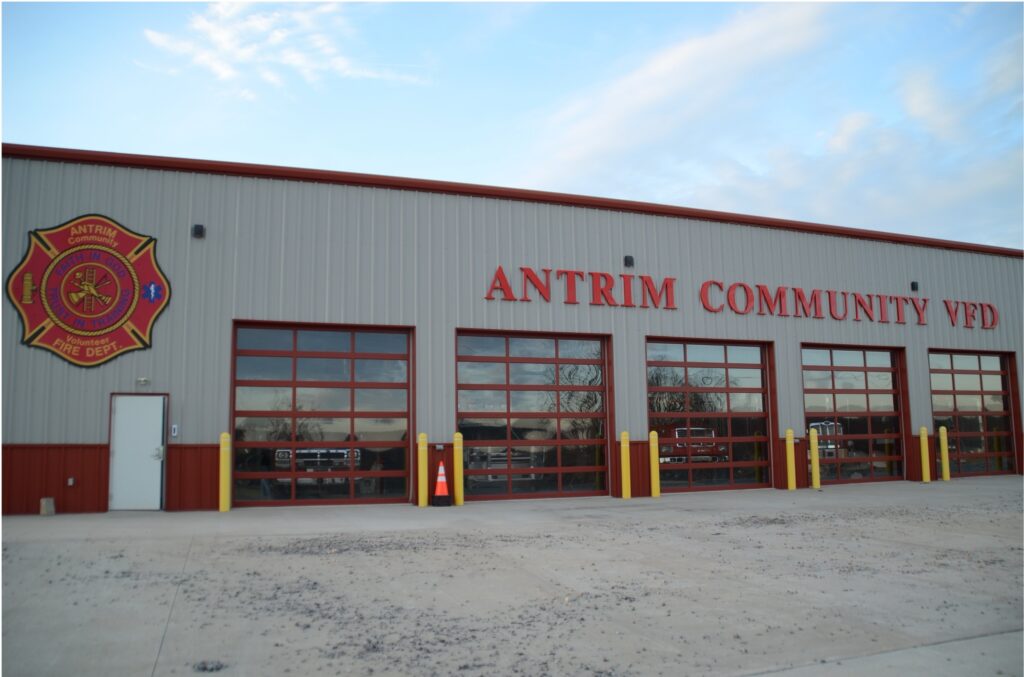
The Antrim Community Volunteer Fire Department station is only about a mile away from the Groh well pad, so Warnock heard the explosion even before receiving a dispatch call.
He says that although he couldn’t see any smoke coming from the well pad, he knew it was real.
“I felt it. It was like [the fire station] shook,” Warnock says.
Not the first time
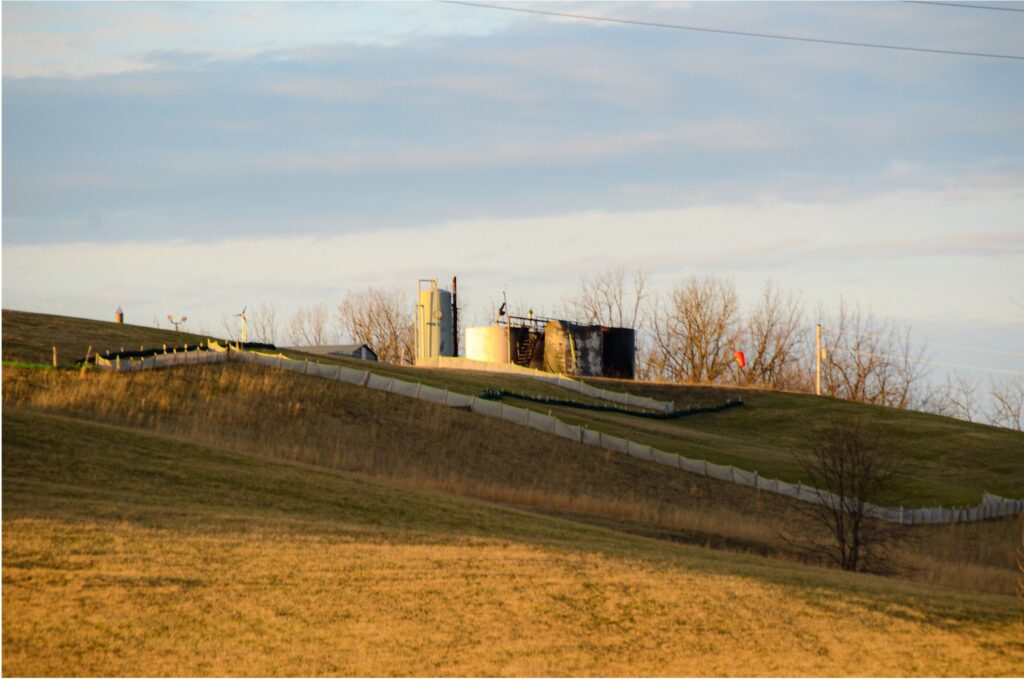
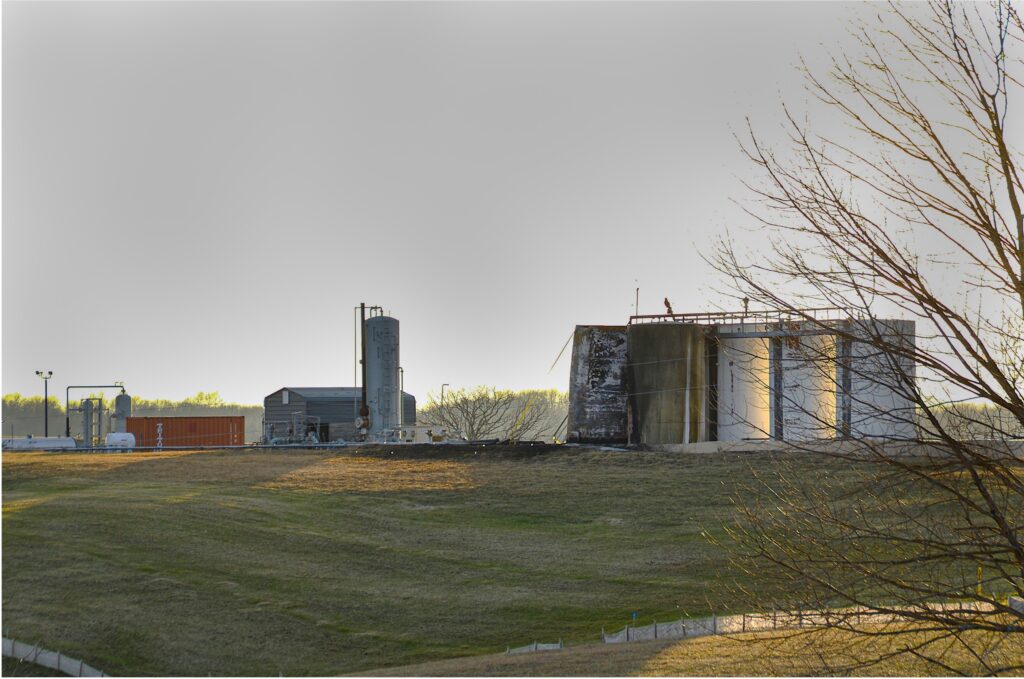
One of the white reservoirs at the site is left charred from the fire. Photo by Raphaëlle Anglade.
Warnock says the department gets lots of calls to the well pads. People often see the flares and mistakenly think the well pad is on fire.
The Groh well pad fire isn’t the first oil well fire in Guernsey County. Antrim VFD responded to one other incident in 2018 at a well on Jasper Road in Londonderry township. The fire was contained to the pad and no one was injured.
Roxanne Groff, former Athens County Commissioner and Bern Township trustee, says the Groh well pad fire is just another example of neglect by the state of Ohio.
Groff says there have also been other well pad fires outside of Southeastern Ohio.
In 2012, a well pad exploded in Bolivar, killing one worker.
Another well pad exploded in Belmont County in 2018, which led to brine and natural gas pouring out of the well, resulting in a one-mile radius mandatory evacuation.
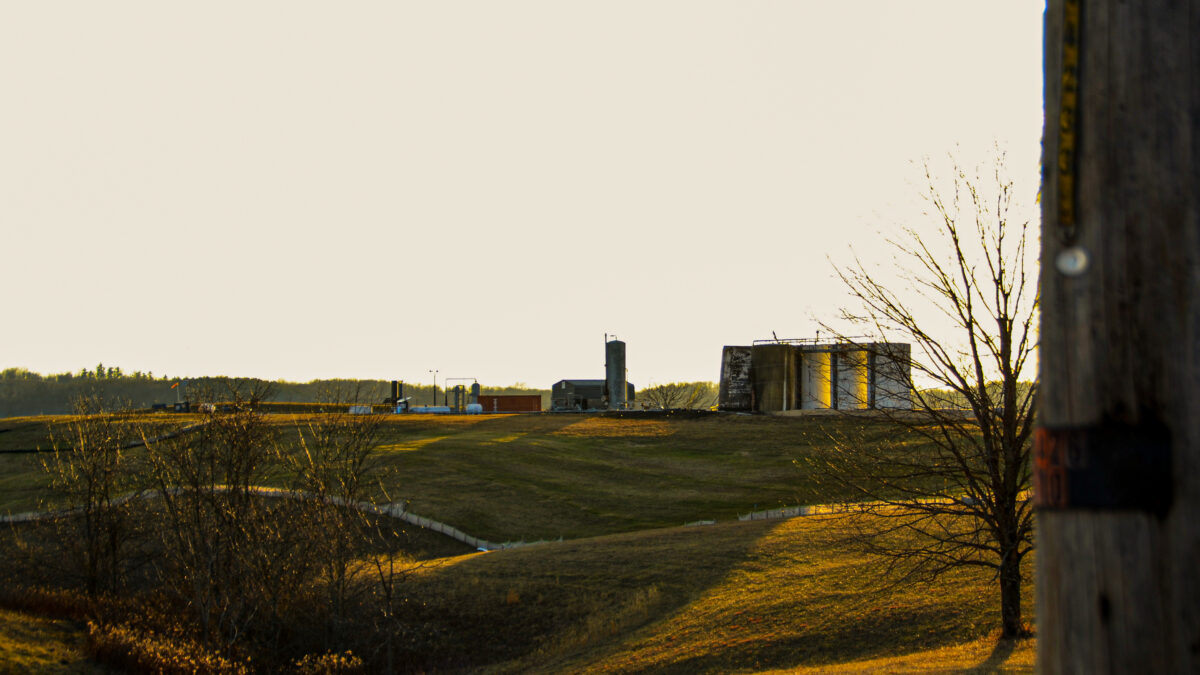
Groh well pad can be seen distantly on a hillside close to Salt Fork State Park. Photo by Raphaëlle Anglade.
She says local and state elected officials have let the oil and gas industry run rampant, demonstrating the need for harsher regulations within the industry, which has occupied the Appalachian region of Ohio for over a century.
Why Southeastern Ohio?
Most of the state’s oil drilling occurs in Southeastern Ohio, which is one of the oldest oil-producing regions in the U.S.
Scott Miller, associate dean of industry partnerships and outreach for the Russ College of Engineering at Ohio University, says the region’s geology is the reason for its vigorous oil-drilling industry.
For hundreds of millions of years, sedimentary rock, plants and dinosaurs have been under immense pressure under the Earth’s surface, creating the oil and natural gas layers predominantly located in today’s Appalachian zone.
“John Rockefeller, who made all of his money with Standard Oil was located in Ohio because of the abundant reserves down here,” Miller says.
Consumer choice
Miller says well pad explosions are relatively rare, but because there are tens of thousands of cubic feet of gas, when problems occur, they are much more catastrophic.
He’s also noticed the energy sector allowing for consumer choice over the past 15-20 years. People are allowed to choose what side of the continuum they live on, whether that’s using renewable or non-renewable energy.
Miller acknowledges many people don’t understand where their energy comes from, he says they just know it is there.
The Antrim Volunteer Fire Department worked with leadership from Gulfport to respond to the well pad fire. Photo by Raphaëlle Anglade.
“The more you dig into the [energy] system, it depends on your personal and your family ethic,” Miller says. “I think people have a right to demand something that aligns with their ethics.”
Groff says the region’s population hasn’t been given an opportunity to look at the effects of oil and gas extraction, even beyond the risk of explosions. She believes people are under-informed about opportunities for renewable energy.
“For chambers of commerce and local elected officials to not recognize that the region has opportunity besides extraction industry is woefully lacking,” Groff says.
Groff believes when people understand the effects of hydraulic fracturing, or fracking, can have on their health and wellbeing, they can make an informed decision about how they get their energy, but they need to know the truth.
“As long as you’re digging deeper, you’re going to find the truth,” Groff says.
Find us on Social Media