

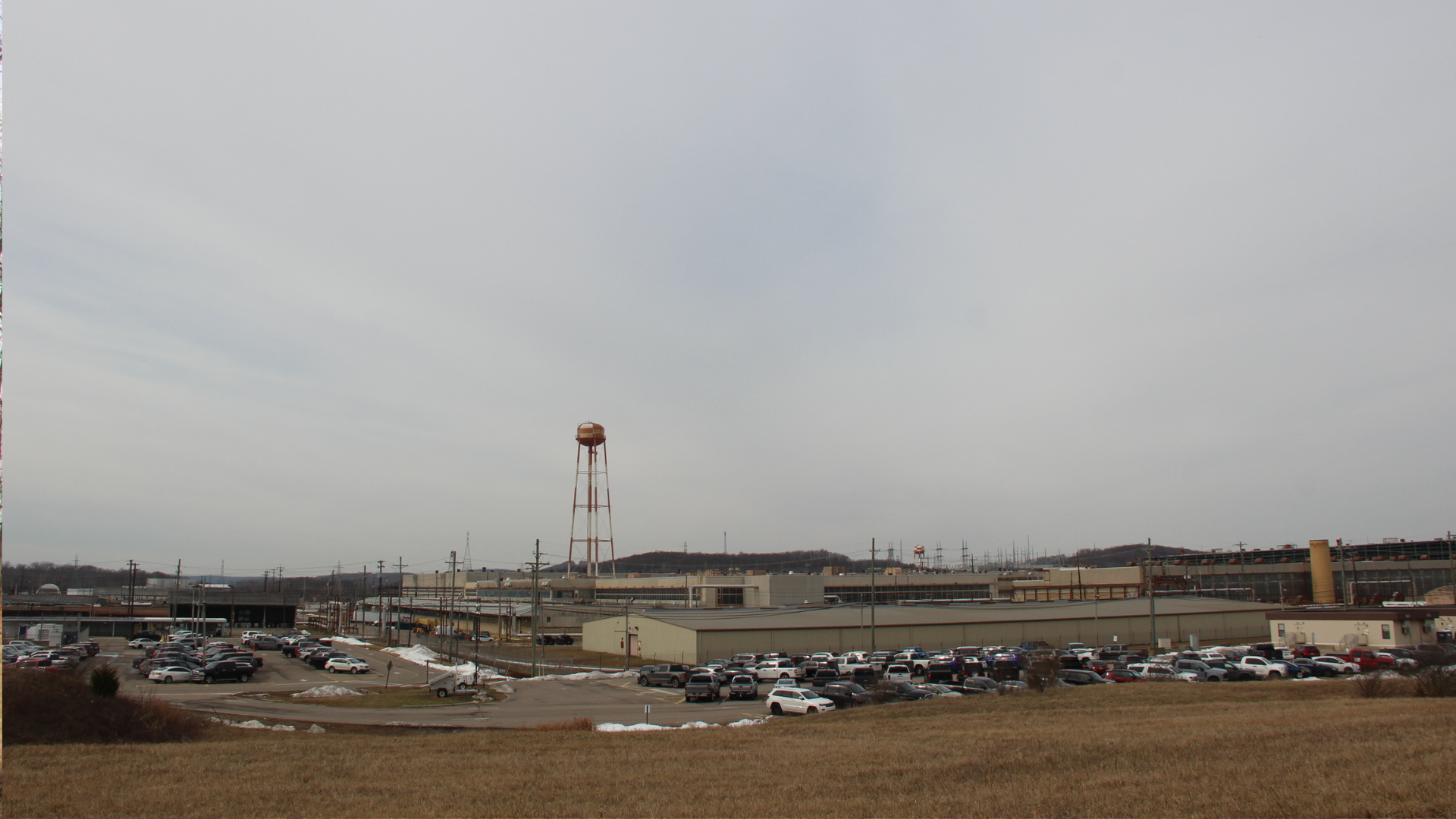
A proposed nuclear project in Pike County could bring jobs and new tax revenue to the region, while renewing concerns from some residents about contamination and safety near the former Portsmouth Gaseous Diffusion Plant.
Pat Marida, a Columbus-based coordinator with the Ohio Nuclear Free Network, has been following a nuclear project in Southeast Ohio since 1981. She works closely with Pike County residents as new projects bring fresh attention and concern to the region.

Just outside Piketon, the Portsmouth Gaseous Diffusion Plant once enriched uranium for the nation’s nuclear weapons program and employed thousands across Southeast Ohio. When production ended in 2001, many jobs disappeared, leaving behind a decades-long federal cleanup effort.
More than 20 years later, nuclear development could return to the same stretch of land.
In January, Oklo Inc. and Meta Platforms, Inc. announced plans to build up to 1.2 gigawatts of advanced nuclear energy on 206 acres in Pike County. The power would support Meta’s data center operations.
According to a Jan. 9 press release, the project would be built in phases, with pre-construction and site characterization slated to start in 2026. The first phase could be operational as early as 2030, with additional units added through 2034.
Instead of a single large reactor, the campus would include multiple smaller units constructed over time.
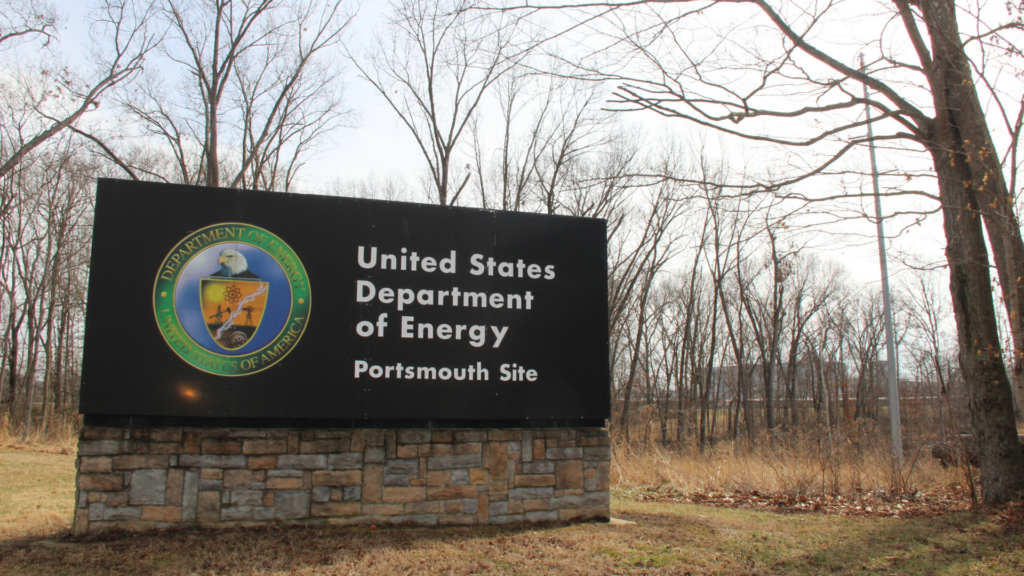
The project site, formerly owned by the U.S. Department of Energy, sits near the Portsmouth Gaseous Diffusion Plant. Cleanup has continued for years under federal oversight.
Marida says that history shapes how many residents view the new proposal.
“There is contamination down there,” Marida says. “The Department of Energy has not been careful. They are dismantling this plant, this old plant … Now they are dismantling it uncovered, which we think it should be covered.”
Through her work, she stays in contact with residents in Pike County and nearby communities. Some have organized support groups and advocacy efforts, including one community organization focused on cancer cases in Scioto Valley.
“They have over 1,000 people in their group that they’ve identified that have cancers in that small area,” Marida says, stressing the scale of cancer cases she says the group has tracked locally.
Those experiences, she says, are part of why some people are wary of new nuclear development, especially on land already tied to uranium enrichment.
The technology proposed for the site is also new.
Oklo plans to use its “Aurora” powerhouses, sodium-cooled fast reactors. No commercially operating advanced fast reactors exist in the U.S. today, according to the World Nuclear Association.
Marida says that lack of a domestic track record adds to her concern.
“They are starting to build a prototype at the Idaho National Lab,” Marida says. “That is a sodium-cooled fast breeder reactor. Sodium catches fire when it’s exposed to air, so we think it’s dangerous in that way.”
Daniel Carney, an associate professor of economics at Ohio University, says the proposal reflects a larger trend tied to the rapid growth of data centers.
“There’s been a significant nationwide increase in projected energy demand from data centers, and there are many (data centers) being built or proposed in Ohio generally,” Carney says. “So it’s not surprising that this has come to Southeast Ohio.”
Each of Oklo’s powerhouses is expected to produce between 50 and 75 megawatts, meaning the 1.2-gigawatt campus will require roughly 16 to 24 reactors, Carney says.
Economic impact is another major part of the conversation.
Oklo estimates the project will bring more than 700 skilled-trade positions during each construction phase and more than 500 full-time roles once the site is complete. Each powerhouse is expected to support roughly 35 permanent positions, with staffing increasing as more units become operational.
Oklo also says the campus will generate local and county tax revenue to support schools, emergency services and infrastructure.
“The big one for local effect is going to be tax base,” Carney says. “It’s unclear exactly what the financing is of this … Will there be local property taxes paid on the site or is it going to be a federal site?”
Pike County Auditor Davida Brown says the project may be subject to local property taxes. Oklo purchased the site from the Southern Ohio Diversification Initiative, and the property will be added to the county’s tax duplicate for tax year 2026, payable in 2027.
Because the site will be classified as commercial or industrial property, Brown says it should not directly affect residential property taxes. However, it might increase the county’s overall tax base as the property’s value is added.
Revenue generated from the site will be distributed through the standard property tax process, with funding going to local governments, school districts, the joint vocational school district and the township.
Carney says the Pike County location may offer advantages because of existing infrastructure from the former enrichment facility. The modular design of the reactors could also reduce financial risk compared with traditional nuclear plants.
“You can start generating revenue earlier before you’re at full capacity,” Carney says, which lowers what he and economists call the capital carrying cost of building the facility.
Carney says large construction projects like this can have ripple effects in rural economies, though the extent of those impacts often depend on who fills the jobs and whether they stay.
“These are presumably going to be relatively high-paying jobs,” Carney says. “It’s an interesting question about will the people that work at the site live in the area, or will they commute down from Columbus or Cincinnati, for instance, or Athens?”
Marida says that uncertainty is one of the concerns she hears from residents.
“The really high technical jobs, they bring other people in,” Marida says. “Then when the plant, if it goes out of business, and inevitably they do, then there are more people there without jobs.”
She believes investment in renewable energy would be a better path forward.
“We think that jobs in solar and wind are better and safer and cleaner and far less dangerous,” Marida says. “That’s the kind of thing that we want the Department of Energy to be proposing.”
The Oklo-Meta partnership is structured differently than a traditional power plant. Under the agreement, Meta will prepay for electricity, helping fund development while securing energy for its operations.
Oklo says that model allows the project to move forward without shifting costs to ratepayers, describing it as an “additive clean generation” that expands grid capacity.
Nuclear power provides about 20% of the nation’s electricity and about 55% of its carbon-free generation as of 2024, according to the World Nuclear Association. The Pike County site would connect to the PJM Interconnection grid, where demand is expected to grow later this decade, driven in part to data centers and other large users.
“We don’t think that that is necessary,” Marida says.
The proposal brings hope of jobs and new tax revenue for some Pike County residents and concerns for others.
“There’s no solution whatsoever to being done with the waste, and that will be around for millions of years,” Marida says.
Find us on Social Media