John DeBoard bought his first wolfdog, Cheyenne, from Texas in 2014. A beautiful white puppy with 86% wolf DNA, DeBoard says Cheyenne soon became his best friend and was the start to a journey he never would have predicted.
“I brought Cheyenne, and that was it. That’s all I was supposed to have. Then they asked me if I would take Hinder,” DeBoard says. “From there it was just a domino effect. The next thing I knew, people had my number—animal control had my number.”
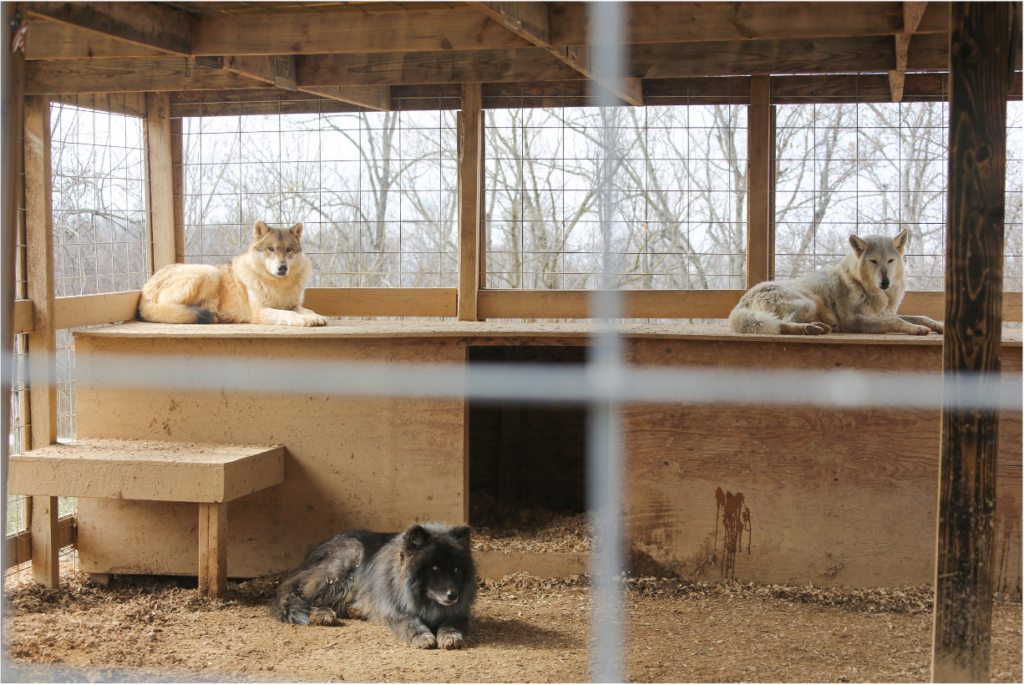
Lobo (left), Diesel (middle) and Tigo (right) sit comfortably in one of the sanctuary's enclosures. Photo by Kendall Wright.
DeBoard had no idea adopting Cheyenne would result in nearly 30 wolfdogs living behind his house a decade later.
The Southern Ohio Wolf Sanctuary, a rehabilitation facility for neglected wolfdogs, began in 2014 with three enclosures behind DeBoard’s home in Lawrence County.
The sanctuary is a nonprofit that runs solely on donations, such as dog food and meat. DeBoard believes in educating the public about wolfdogs and the misconceptions people may have about the breed include:
The difference between low content vs. high content dogs
Sometimes, breeders of wolfdogs tell those looking for the animal that all of their dogs have high wolf content before selling. When the new owners find out that their dogs are not as much of a wolf as they thought, they neglect them.
That is exactly what happened to LoJack, a 4-year-old wolfdog currently living in the sanctuary.
When DeBoard rescued him in 2024, LoJack was missing a lot of hair and was extremely malnourished. After taking him to the vet, the original owner called and asked for the dog back, saying they had made a mistake.
“I was going to be a fool to give them their dog back,” DeBoard says.
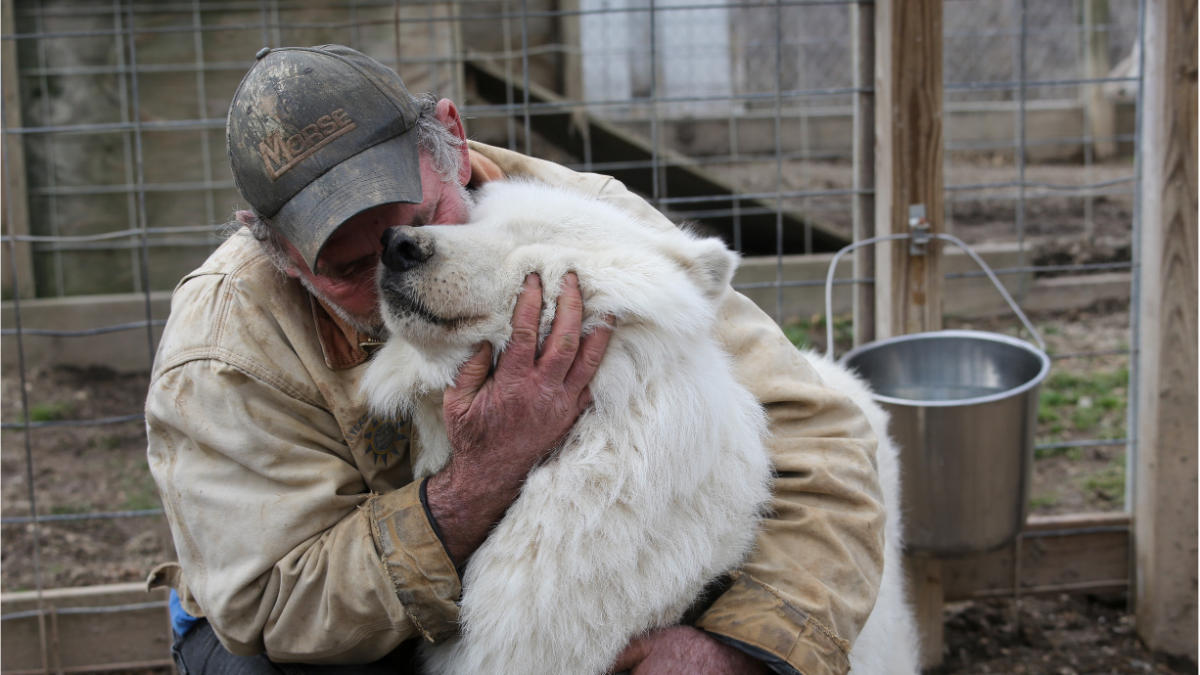
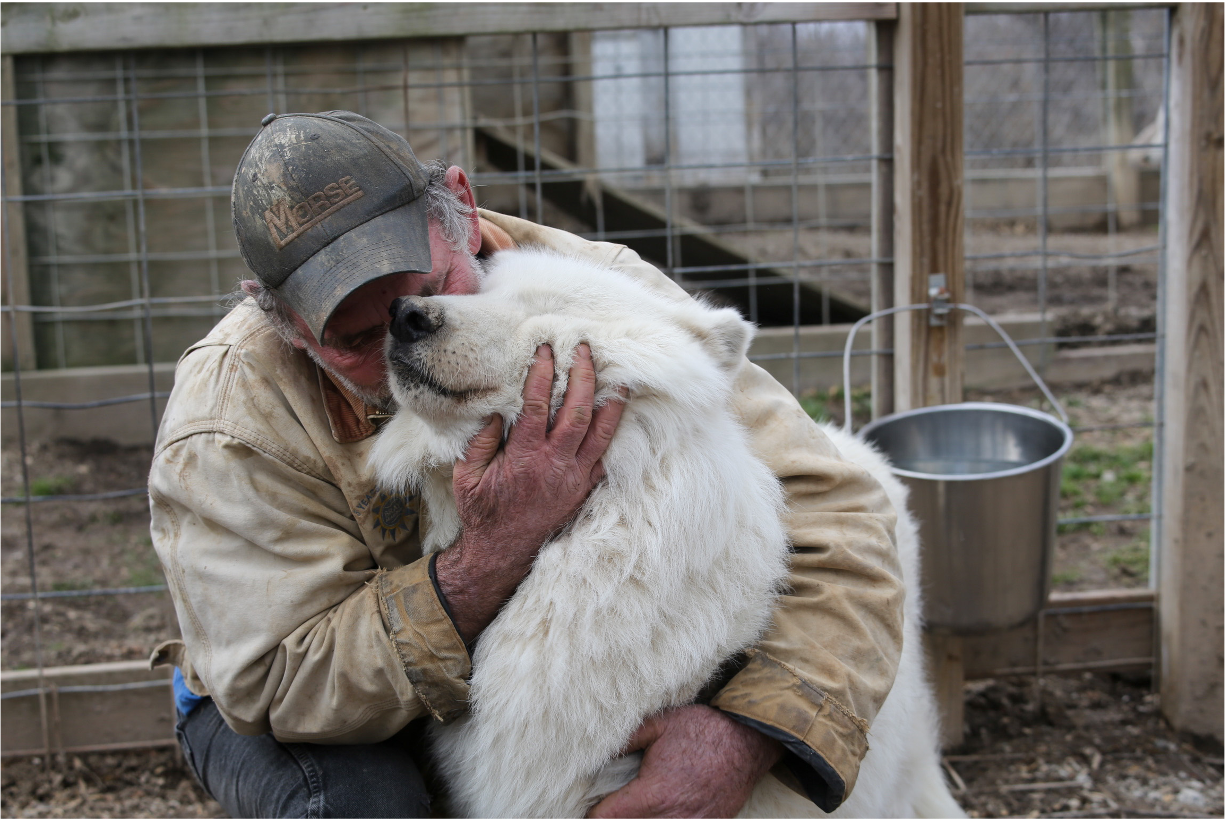
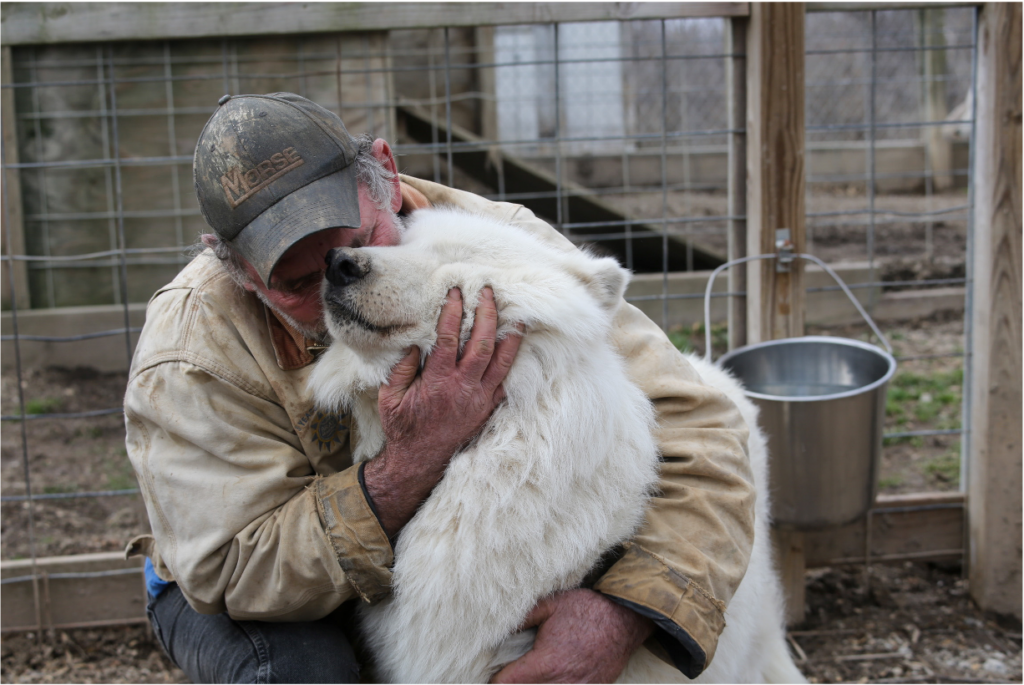
DeBoard gives Apache a big hug. Photo by Kendall Wright.
A thorough adoption process is required before any of DeBoard’s dogs are adopted. He advises that potential owners have an outdoor enclosure with the proper guards.
“There’s a lot to our adoption [process] for containment … not because we say you have to have it outside–we’re not against owning them in the house,” DeBoard says. “But when [your dog] decides to tear up four or five of your couches, you may want him outside.”
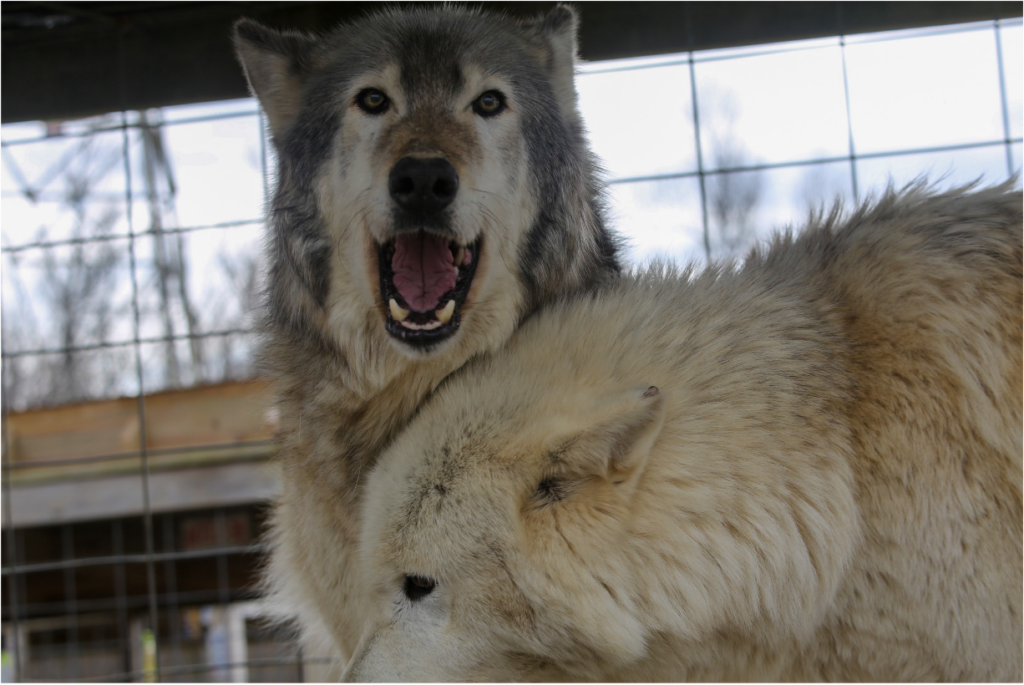
Hinder, DeBoard's second dog, smiles excitedly for the camera as Cheyenne burrows below him. Photo by Kendall Wright.
DeBoard also takes into account the lifestyle and workload of potential owners. If someone is looking for a high-content wolfdog, but works 10-12 hours a day, realistically, it is not the dog for them.
Belinda Wood, an Arizona resident, has adopted two wolfdogs from DeBoard, Luna and Elsa, and is currently on the Southern Ohio Wolf Sanctuary Board.
In 2017, Wood’s husband and son drove out to Lawrence from Surprise, Arizona, to pick up Luna, who was three and a half months old at the time, from the sanctuary.
Two years later, in 2019, three-year-old Elsa was turned into animal control and sent back to DeBoard, underfed and neglected. DeBoard delivered Elsa to Arizona, where she now spends her days sleeping and stealing gummy candy.
Both of Wood’s dogs were diagnosed with glaucoma, Luna in 2017 and Elsa in 2019, causing them to lose their sight and have their eyes removed.
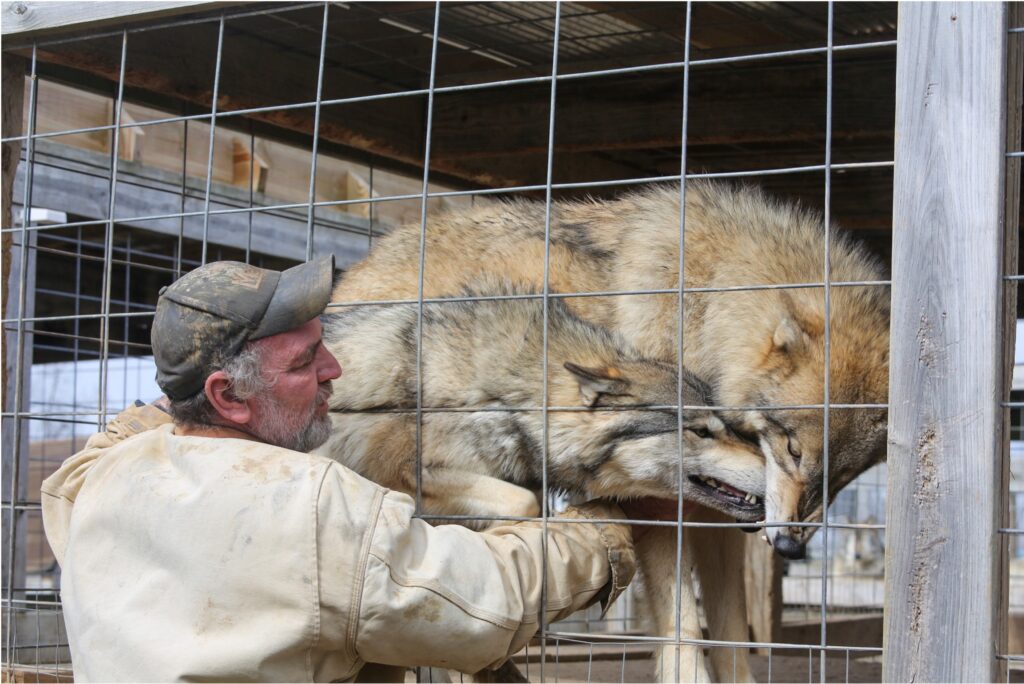
Playful pups, Niyah (left) and KC (right), fighting for DeBoard's attention. Photo by Kendall Wright.
But Wood notes even if they weren’t blind, she says, the behavior of wolfdogs is much different than regular dogs.
“You have to earn [their respect], but once you do, they’ll never let it go,” Wood says. “You don’t just get to walk into their life like, ‘Hey, I’m your owner,’ it’s more like, ‘Hey, I’m going to work to become part of your family and you’re going to work to become part of mine.’”
Besides rehoming some of the pack, DeBoard enjoys being active in his community and including his dogs in the process. He has brought his dogs to birthday parties, local schools and has even heard that his dogs have helped veterans with PTSD symptoms.
“I’m glad that I’ve saved all [the dogs] that I’ve saved,” DeBoard says. “When you look at it, would you really want to do it? I didn’t want to have to know the stuff that people can do to dogs and how cruel people can really be to an animal.”
Looking to the future, DeBoard hopes he can focus more on socializing a lesser number of dogs and spend more time educating the public about the breed.
Think Before You Adopt
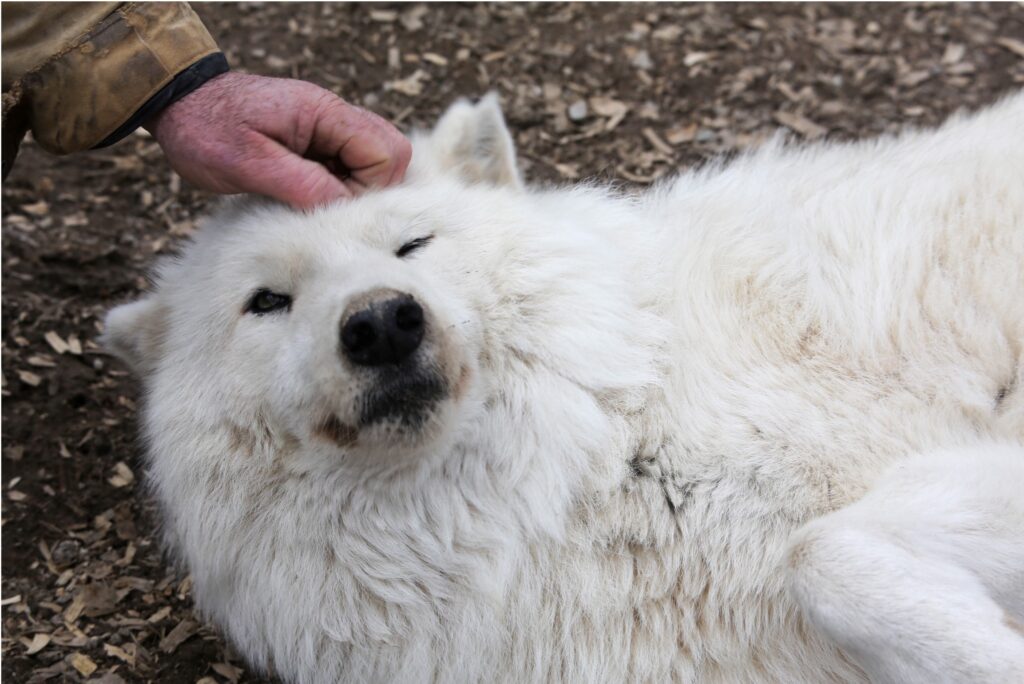
Apache, one of the sanctuary's dogs with the highest wolf content, being pet by DeBoard. Photo by Kendall Wright.
Similarly to DeBoard, the Athens County Dog Shelter also asks about the home life of the adopter before allowing them to purchase a dog.
Although Athens County Sherrif’s Office Dog Warden Lt. Ryan Gillette has never seen a dog with high wolf content come through the shelter, any breed of dog has a chance of being brought back if lifestyles do not match up.
Gillette says an owner’s lifestyle should complement their dog’s lifestyle. For example, people with a more active lifestyle, such as those who work from home or jog a few miles a day, are more capable of providing for a high-strung dog.
“That’s what we mean by trying to match up the dog personality with the person personality, making sure that you know they’re able to coexist without driving each other crazy,” Gillette says.

Find us on Social Media