


Looking in from the outside, Meigs County appears to be a quiet place. A landscape of wooded hills and scattered plots are stitched together by narrow streets and back roads. But beneath that still environment sits a set of interconnected crises that rarely draw attention; persistent poverty, deteriorating residences and a form of homelessness that remains apparent yet largely invisible.
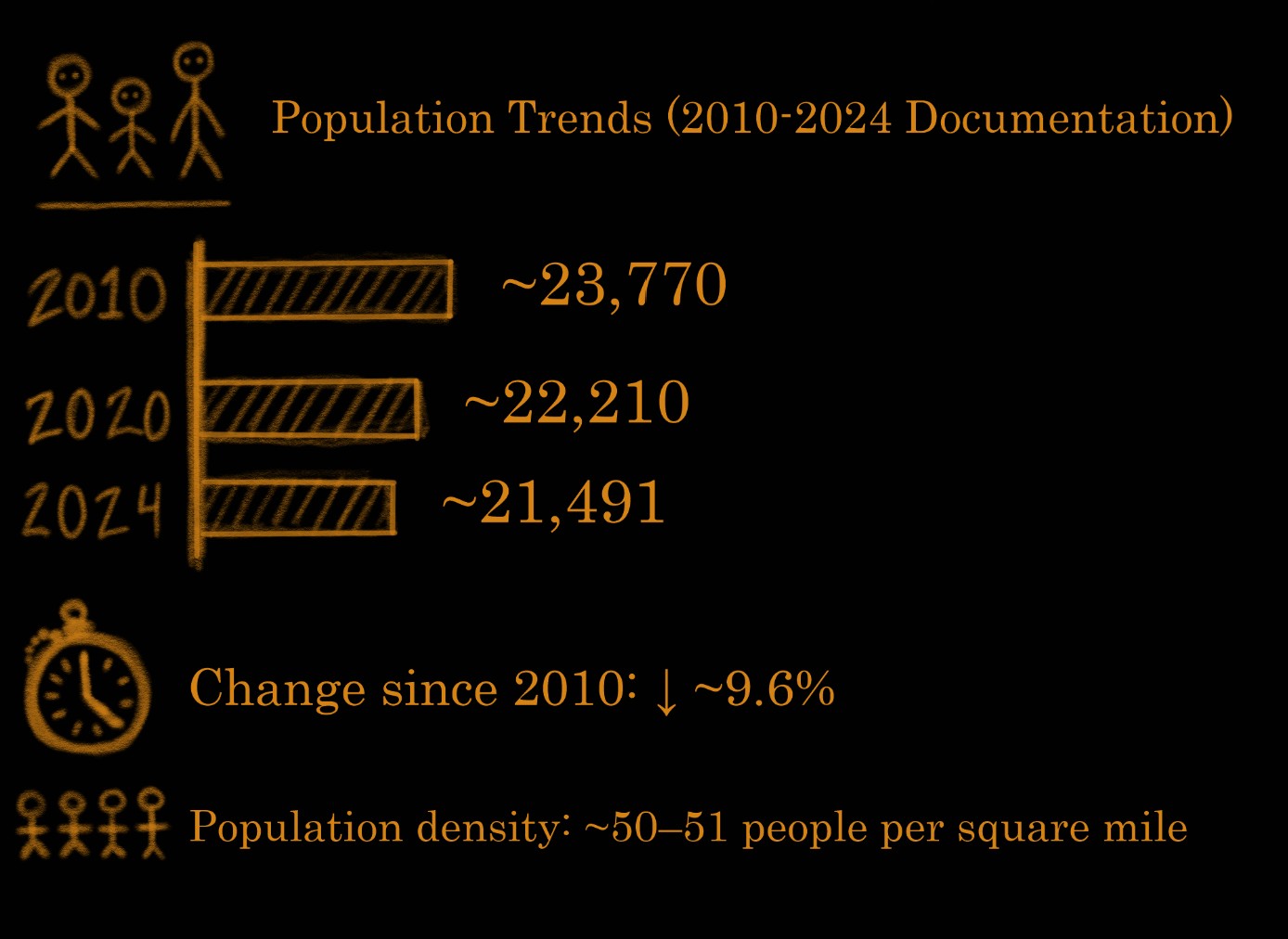
The county’s population has steadily declined for more than a decade. In 2010, Meigs County was home to roughly 23,770 residents. By 2024, that number had fallen to an estimated 21,491, according to U.S. Census Bureau and American Community Survey data. The nearly 10% drop mirrors broader rural depopulation trends across Southeast Ohio. Fewer residents mean a smaller tax base, reduced services and fewer resources to maintain aging infrastructure, including housing. It does not appear that new residents are moving in.
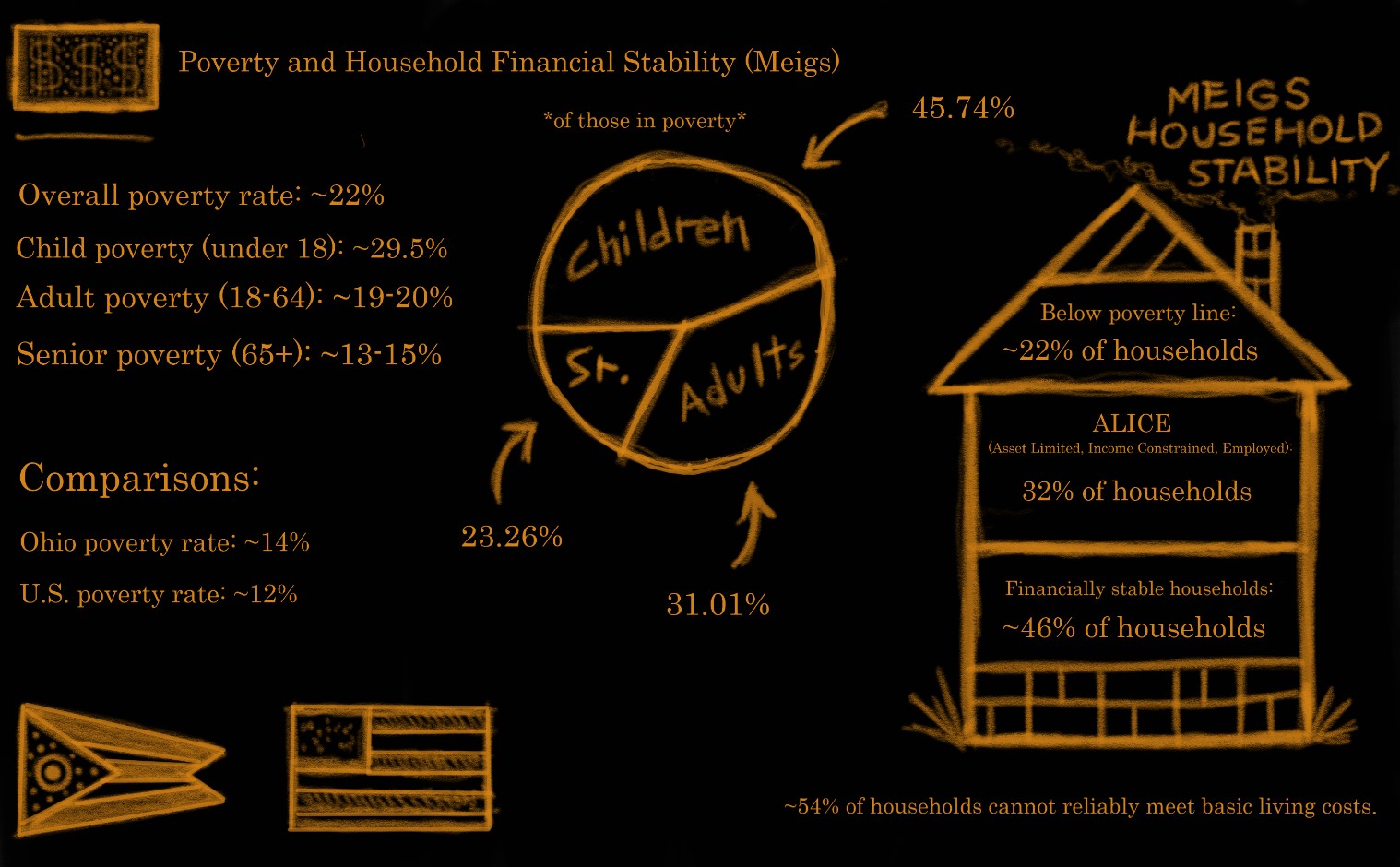
Poverty remains widespread. According to the U.S. Census Bureau, about 22% of Meigs County residents live below the federal poverty line, compared with roughly 14% statewide and 12% nationally. Children feel the impact most. Nearly 30% of Meigs County residents younger than 18 live in poverty. For families, that often means unstable housing, limited access to transportation and difficult trade-offs between paying rent, utilities and other necessities.
Pomeroy resident Christopher Grap says transportation and housing costs create constant pressure for working families. Grap and his son both work full-time in construction.
“I work in Vinton County, and now that I’m borrowing my brother’s car, transportation is a bit difficult,” Grap says. “Luckily, he works remotely, so there is not too much conflict for when I can and cannot use his car. But there are days when he needs it, and I need to rely on my son to not only drop me off at work but also pick me up. Realistically I could use Uber, but I don’t have the money to be doing all those trips.”
Grap says saving money in Meigs County can be difficult because of housing conditions and utility costs.
“Utilities are the worst,” Grap says. “A lot of the homes around here are very poorly insulated, so when that bill comes in, it’s like we’ve been living in Beverly Hills.”
He added that although rent or mortgage payments may appear affordable, maintenance issues increase long-term costs.
“The housing itself is cheap enough, but you pay for that with just how bad the maintenance for these places can be,” Grap says.
Poverty alone does not paint the full picture. The “Asset Limited, Income Constrained, Employed” report, known as “ALICE”, shows that 32% of households earn above the poverty threshold but still cannot reliably afford basic living costs. These households work full-time but lack sufficient savings to remain financially secure, making residents especially vulnerable to eviction, medical emergencies or job disruptions. Combined with those living in poverty, analysts consider more than half of Meigs County households financially unstable.
According to the U.S. Census Bureau, housing conditions heighten that instability. Of approximately 10,600 housing units in the county, between 14% and 17% are vacant. For every 20 homes passed, about three to four appear abandoned. In growing areas, vacancies might suggest a housing surplus. In Meigs County, it more often signals deterioration. Many empty homes are older structures requiring repairs residents cannot afford, and officials are reluctant to invest in them. For the most part, these homes are no longer safe to inhabit. Others sit unfinished or were left behind after economic hardship forced owners to leave.
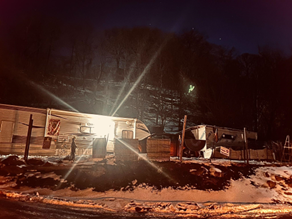
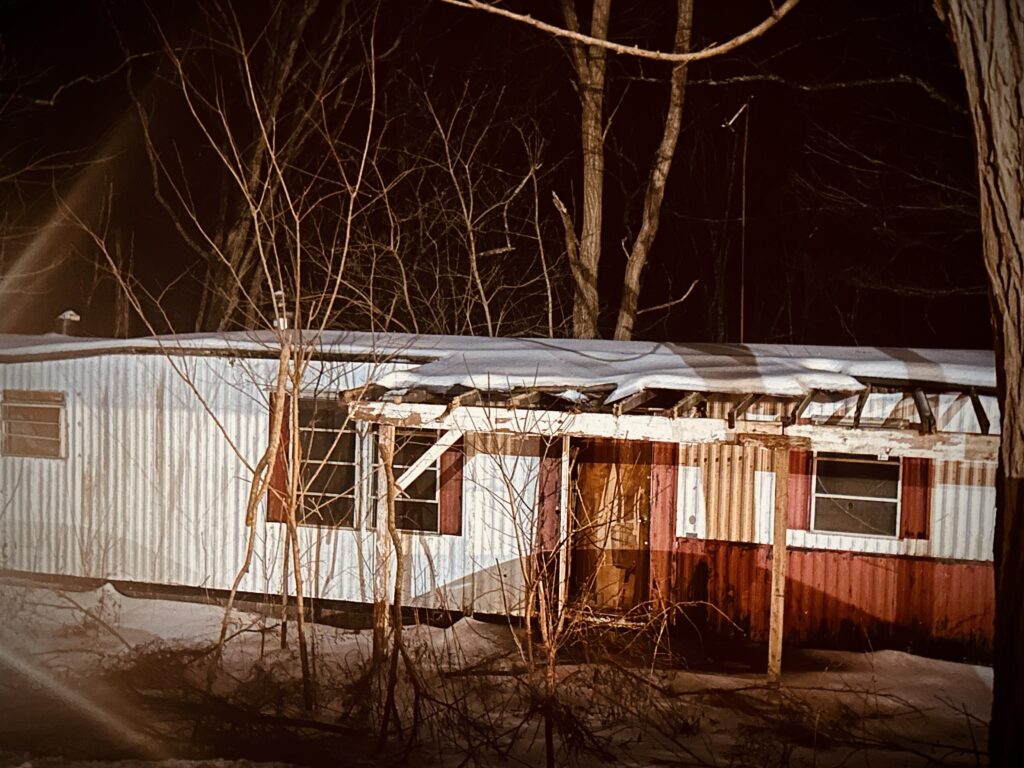
An average low-income housing unit (L) and an abandoned household. (R) | Photos by Wyatt Rivers
Rural housing decay is rarely dramatic. Unlike urban abandonment, where boarded windows and condemned signs mark decline, deterioration in Meigs County often unfolds slowly. Roofs sag, utilities fail and maintenance is deferred until homes ultimately become unlivable. Websites like the U.S. Accountability Office insist that because the decline is gradual, many of these properties are never formally recorded as abandoned. That masks the true extent of housing loss across the county.
The lack of shelters and outreach infrastructure further complicate the issue. Without formal places to go, individuals experiencing homelessness often remain unsheltered or cycle between unstable living situations. That invisibility can make homelessness appear minimal and reduce urgency among policymakers.
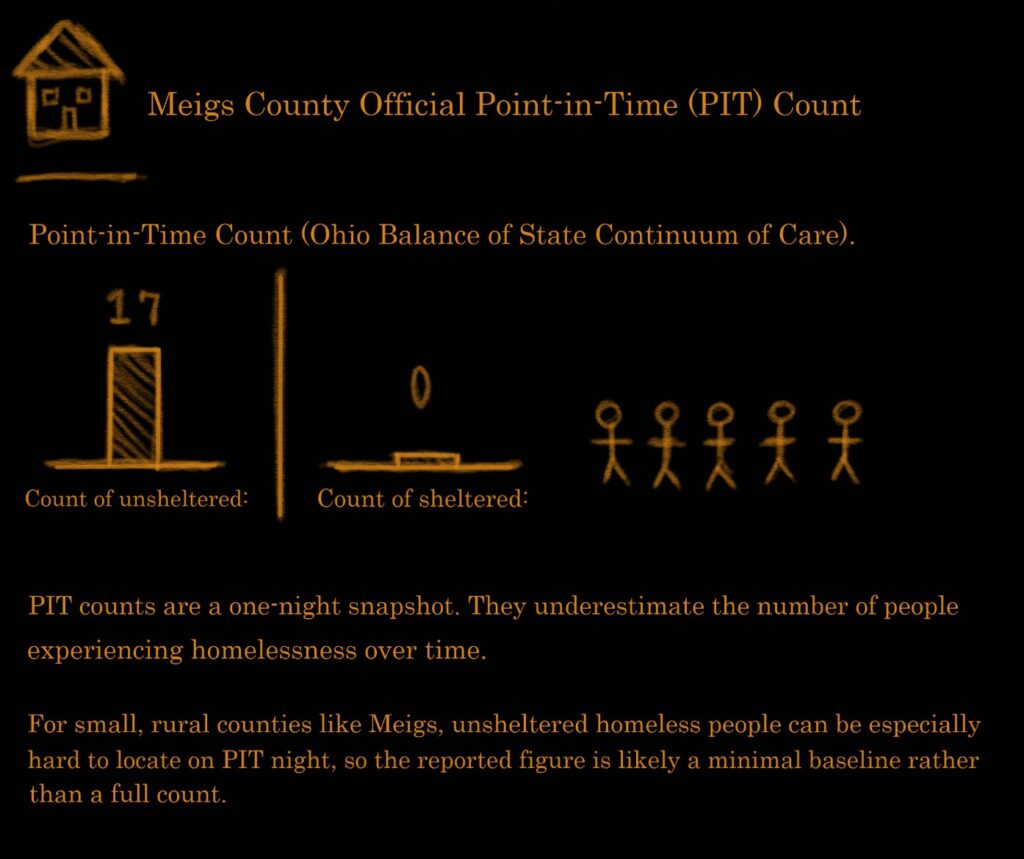
Those conditions feed directly into a systematic cycle of homelessness, a problem that remains largely hidden. In January 2024, the Ohio Balance of State Continuum of Care recorded 17 people experiencing homelessness in Meigs County during its Point-in-Time count. All were unsheltered.
Michael Barnett, curriculum and federal programs director for Meigs Local School District and the district’s McKinney-Vento homeless liaison, says homelessness in rural areas often looks different than in urban areas.
“We categorize homeless youth as anyone who faces irregular and inadequate residence,” Barnett says. “So children who don’t have any form of stable shelter qualify for our program.”
Barnett notes that the McKinney-Vento Act requires schools to immediately enroll students experiencing homelessness, even if they lack typical documents such as immunization records or proof of residence.
“It is the McKinney-Vento Act’s responsibility to acknowledge and enroll any child in deep poverty,” Barnett says. “We also don’t need any of those typical documents.”
He says the law also ensures transportation to and from a student’s school of origin to maintain stability.
Barnett says homelessness includes children living in motels, hotels, trailer parks or campgrounds due to lack of alternative accommodation, as well as those staying in cars, public spaces or abandoned buildings. The program also covers families who are doubling up or living in substandard housing.
Point-in-Time counts offer only a snapshot of the problem. In rural areas, homelessness rarely looks like people sleeping on sidewalks or in encampments. Instead, it often takes the form of people living in vehicles or staying temporarily with friends or family. Some occupy abandoned or unsafe structures. These realities keep many people out of sight and out of official counts, meaning the data captures only a fraction of those experiencing homelessness, particularly in rural areas where homelessness often goes unreported, according to the Rural Health Information Hub.
Statewide trends suggest the problem is growing. While national reports show homelessness declining overall, Ohio has seen increases in recent years, driven by rising housing costs, stagnant wages and a limited supply of affordable rentals.
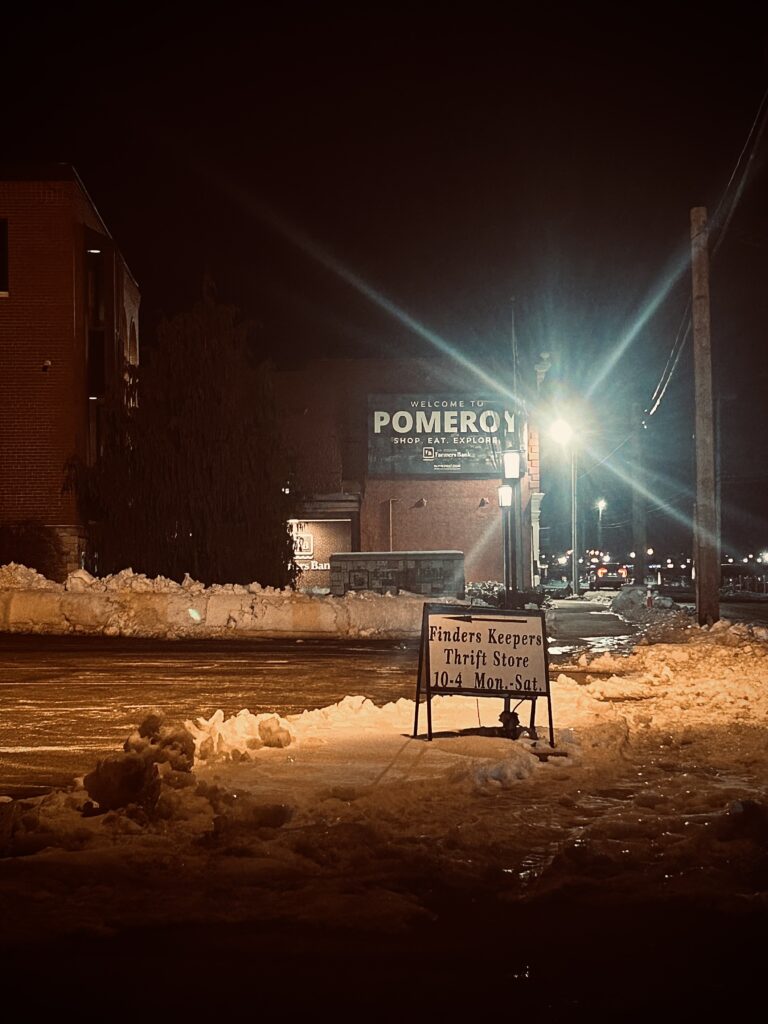
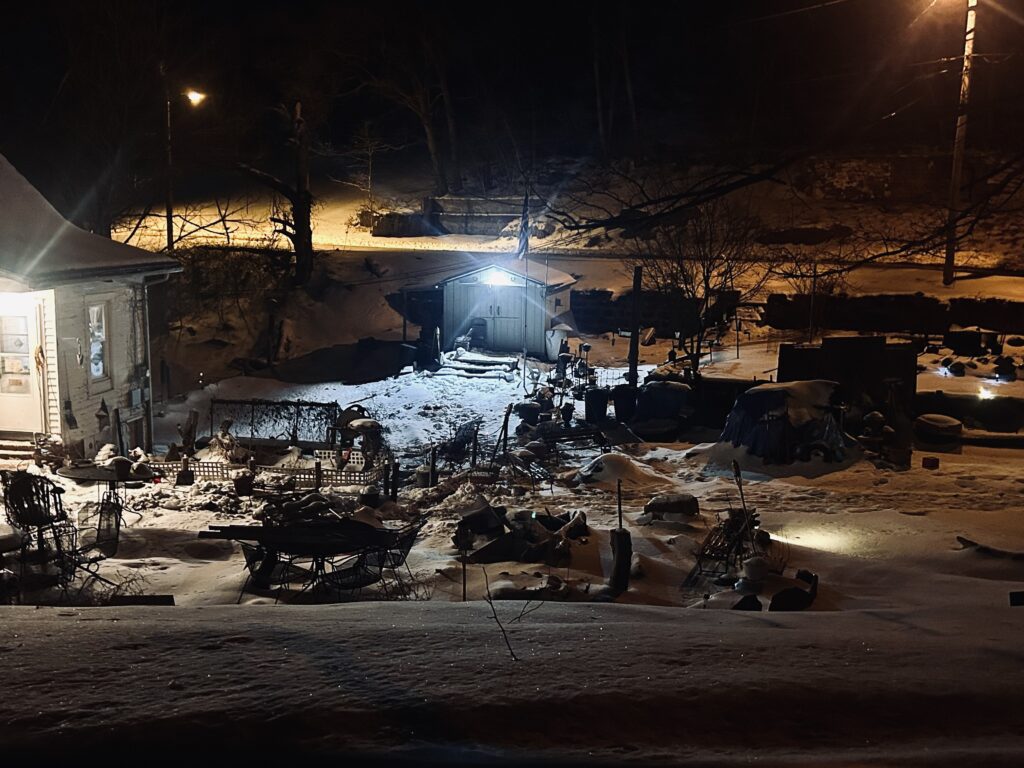
Pomeroy Township (L) and a home with a presumed scrapyard. (R) | Photo by Wyatt Rivers
Rural counties such as Meigs face additional challenges, including fewer service providers and greater distances between resources, according to the Health Resources and Services Administration. In Meigs County, those pressures intersect with population decline and aging housing stock, increasing the risk of displacement for residents already living on the margins. These residents aren’t gone; they remain largely unseen.
Together, poverty, housing decay and homelessness form a reinforcing cycle. Low incomes make it difficult to maintain homes. Deteriorating housing reduces available shelter. The absence of stable housing increases the risk of homelessness and makes it harder for individuals and families to regain their financial footing.
In Meigs County, this cycle plays out quietly—in homes left to deteriorate along back roads, in families that are one unexpected expense away from losing shelter, and in residents living without stable housing far from public view. The crisis is not defined by a single statistic or moment, but by a slow erosion of stability that continues largely out of sight.
Find us on Social Media